Australian summers are getting hotter, longer, and more intense. And while air conditioning can offer quick relief, running it around the clock comes at a cost to your energy bills, your comfort, and the planet.
At Ecoliv, we believe a truly comfortable home shouldn’t rely on mechanical cooling alone. A high-performing home can stay naturally cooler even on the hottest days by using smart design, better materials, and a few simple habits that work with the climate instead of fighting it.
Below, you’ll find practical steps you can start today, plus the longer-term upgrades that make a lasting difference.
Why Air Conditioning Isn’t the Whole Answer
Air conditioning is often treated as the only solution, but it’s really just a fast response to a deeper issue: heat getting into your home and staying there. If the building shell (your roof, walls, windows and floors) is absorbing heat all day, your air con has to work overtime just to keep things tolerable.
That doesn’t just show up on your electricity bill, it shows up in your daily comfort. Many homes feel icy-cold when the unit is blasting, then instantly stuffy the moment it switches off. That temperature swing can be exhausting, especially overnight when you’re trying to sleep.
The more we rely on constant mechanical cooling, the more we lock ourselves into higher energy demand during heatwaves, exactly when the grid is under pressure. A smarter home is one that stays comfortable by design, so the air con becomes a backup plan, not a lifestyle.
Start With Passive Solar Design (Your Biggest Advantage)
Passive solar design is the art (and science) of making your home naturally comfortable by using orientation, shade, airflow, and materials to control heat. The best part? Once it’s built in, it doesn’t need power, filters, or constant adjustments — it just quietly works.
At Ecoliv, passive solar design is where comfort begins. We think of a home like a living system: it should breathe, respond to the sun, and create stable indoor temperatures without needing to “correct” the climate all day.
Reflecting our 5 environmental goals - here are the key passive design strategies that make the biggest difference in an Australian summer:
✔ Smart Orientation
The direction your home faces determines how much heat it copes with — and when. A well-oriented home reduces exposure to harsh summer sun (especially from the west), while still letting in soft winter warmth when you want it.
By positioning living areas and larger windows to capture favourable light and breezes — and protecting the most vulnerable sides of the home — you can dramatically reduce overheating. This is one of the most powerful “set and forget” ways to improve comfort.
✔ Cross Ventilation
Heat needs an exit strategy. Cross ventilation creates it by allowing air to flow through the home from one side to the other, pulling warm air out and bringing cooler air in.
This works best when windows and doors are placed to encourage airflow (not just in one room, but through the whole home). Even a gentle breeze can make a house feel dramatically more comfortable — and it doesn’t cost a cent to run.
✔ Insulation: The Unsung Hero of Summer Comfort
Many people think insulation is only for winter, but in summer it’s just as important — because insulation slows heat transfer in both directions. In other words, it helps keep outdoor heat out and cool indoor air in.
If your ceiling or roof isn’t well insulated, your home can heat up like an oven, especially in the late afternoon. And once the heat is inside, it can hang around well into the night — making bedrooms uncomfortable and sleep harder than it needs to be.
The most important areas to focus on are your roof/ceiling (the biggest heat gain zone), followed by external walls and any gaps that allow hot air to leak in. Think of insulation as a protective layer that makes every other cooling strategy work better.
✔ Shade Is Your Best Summer Friend
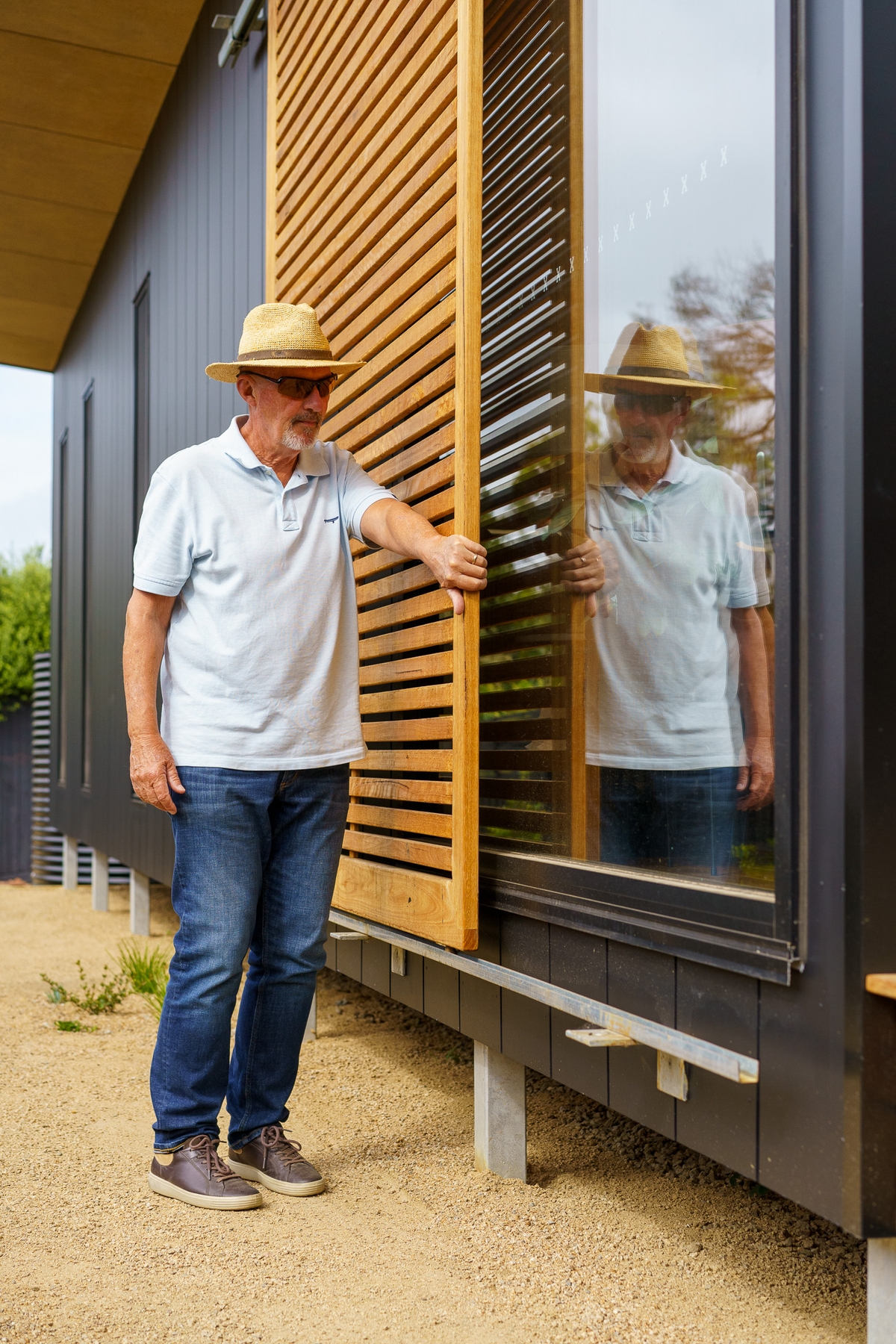
If the sun is hitting your glass, your home is being heated directly — often faster than you realise. That’s why shading is one of the quickest ways to improve summer comfort, particularly in homes with large windows.
External shading is the gold standard because it stops heat before it enters the building. Eaves, pergolas, adjustable external blinds, and shutters all create a barrier between the sun and your windows — reducing glare and keeping indoor spaces calmer.
Natural shading counts too. Deciduous trees can block harsh summer sun while allowing winter warmth through when the leaves drop. A shaded home doesn’t just feel better — it also reduces the need for mechanical cooling and helps protect furnishings from UV damage.
✔ Sealing with Passive House Principles (Next-Level Summer Comfort)
Passive House (Passivhaus) takes passive design to the next level by creating an ultra-efficient “shell” around your home — keeping heat out in summer, warmth in during winter, and indoor air healthier year-round.
It does this through airtight construction and sealing with vapour permeable wrap, high-performance insulation, thermal-bridge-free detailing, and high-performance windows and doors that reduce unwanted heat gain. Combined with smart glazing and external shading, it delivers “passive comfort, engineered”: a home that stays naturally cooler, uses less energy, and feels calmer through heatwaves.
Let the Night Do the Work (Night Purge Cooling)
In many parts of Australia, evenings bring relief — even after a scorching day. Night purge cooling takes advantage of that cooler night air to flush built-up heat out of your home.
The idea is simple: once outdoor temperatures drop below indoor temperatures, you open windows (ideally on opposite sides of the house) and let airflow sweep warm air out. If your home has thermal mass, this also helps cool down those materials, so your home starts the next day from a better baseline.
This strategy can be especially effective if you open up the home early in the evening, then close it again in the morning to “trap” the cooler air inside. Done consistently, it can significantly reduce how often you need to use air conditioning.
Use Fans First, Air Con Second
Fans are one of the most underrated tools for summer comfort — because they use far less energy than air conditioning and still make you feel noticeably cooler. A fan can create a wind-chill effect that makes the room feel several degrees cooler on your skin.
They work best when paired with natural ventilation — circulating air, preventing hot pockets, and helping your body release heat more effectively. In many cases, that’s enough to stay comfortable without needing to cool the whole room mechanically.
A simple rule: if the house isn’t overly hot yet, try a fan first. Save the air con for extreme heat days or short bursts, rather than defaulting to it as your first move.
Choose Energy-Efficient Appliances (They Add Heat Too)
Your home doesn’t only heat up from the sun — it heats up from within. Appliances, lighting, and even electronics generate heat, and during summer that extra heat load can push your home from “warm” to “unbearable.”
Older halogen lights, inefficient fridges, and heavy-use appliances like ovens and dryers can raise indoor temperature quickly. Switching to LEDs, running heat-generating appliances at cooler times of day, and choosing efficient models can make your home feel lighter and easier to keep comfortable.
This is also where cooking habits help: a barbecue, slow cooker, microwave, or air fryer often produces less indoor heat than using the oven during a heatwave.
Design for Long-Term Comfort, Not Short-Term Fixes
Quick tips help — but the biggest difference comes from improving the home itself. When your building envelope and design are working properly, comfort becomes effortless and consistent, not something you have to constantly manage.
At Ecoliv, we design homes that are climate-resilient and regenerative in spirit: they’re built to reduce energy demand, support wellbeing, and perform through hotter summers without relying on constant mechanical intervention.
That means thinking holistically: insulation, airtightness, shading, window performance, ventilation pathways, and material choices all working together. The outcome is a home that feels calm in the heat — and helps reduce emissions at the same time.
A Cooler Home Is a Smarter Home
Keeping your home cool shouldn’t mean choosing between comfort and sustainability. With the right design moves and a few smart habits, you can reduce overheating, improve sleep, and keep your energy bills under control — without running the air con 24/7.
A naturally cooler home is also a more resilient one. It supports your wellbeing during heatwaves, reduces strain on the grid, and is a meaningful step toward lower-impact living.
That’s what we’re here for: homes that are better for people and better for the planet.
Ready to Build or Upgrade a Naturally Cooler Home?
If you’re thinking about building Ecoliv can help you create a home that stays comfortable in summer — with less energy, less stress, and more ease.
Because the coolest homes aren’t the ones blasting air con — they’re the ones designed to stay comfortable naturally.